


Rolldown Credit Edition Launches Amid Market Optimism
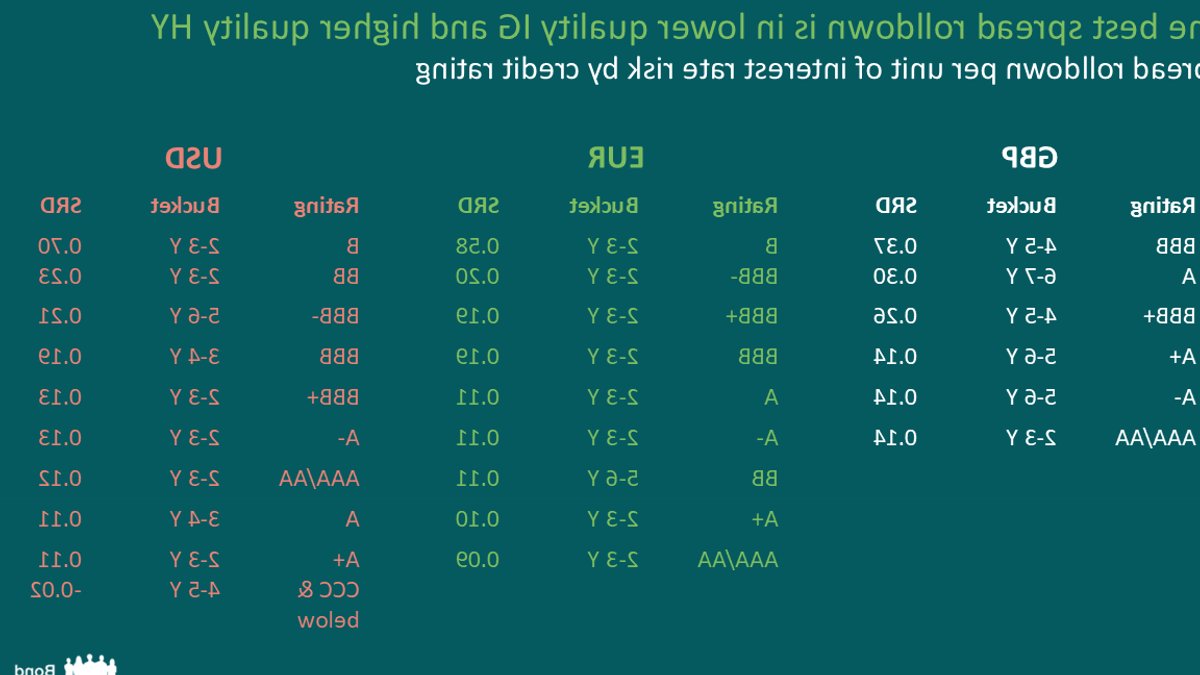
Investors looking at the corporate bond market have a new data point: the credit spread rolldown, which appears to offer the most risk‑adjusted return in a 2‑to‑7‑year maturity window.
Study finds a sweet spot similar to government curves
The analysis draws on 20 years of monthly index data from July 2006 through May 2026, using the IBoxx Corporate series. It compares investment‑grade and high‑yield issues in Europe and the United States, while the United Kingdom is limited to investment‑grade securities.
Researchers isolated the monthly change in credit spread— the extra yield over a comparable sovereign benchmark— and divided that figure by the bond’s duration. This ratio, termed spread roll‑down efficiency per duration, shows how much extra return is earned for each unit of interest‑rate risk.
Across the three major currencies, the metric peaks in the 2‑7‑year segment of the curve. That mirrors earlier findings for sovereign bonds, where the 3‑5‑year range delivered the strongest rolldown effect.
Related: Flightless Hawk Rescued by Wildlife Team
In practical terms, the study suggests that a portfolio tilted toward mid‑term corporate issues could capture a “free lunch” of additional spread without taking on disproportionate duration exposure.
The relevance of this insight goes beyond pure numbers. For investors, balancing spread capture against price volatility is a core challenge; a higher efficiency figure indicates a better trade‑off, potentially improving Sharpe‑type metrics. It also informs duration management, as the optimal bucket aligns with a period where price appreciation from rolldown is most pronounced.
Currency‑specific results highlight a 2‑to‑7‑year window
In sterling‑denominated markets, the top performer is the 4‑5‑year BBB segment. These bonds generated the highest annualised monthly roll‑down return after adjusting for duration risk.
Euro‑area data tell a slightly different story. Across rating categories, the 2‑3‑year bucket leads the pack, with single‑B and lower‑investment‑grade issues offering the most attractive risk‑adjusted spreads.
Related: GoldBod CEO Calls Diaspora for Long‑Term Investment
U.S. dollar instruments show a broader spread of optimal maturities, but the pattern still centres on 2‑6‑year securities ranging from single‑B up to BBB+. The dispersion is modest, allowing investors to focus on a relatively tight band.
When the three currencies are combined, the aggregate picture reinforces the 2‑to‑7‑year sweet spot. The study’s tables, derived from the same IBoxx indices, rank each maturity bucket against all credit ratings, confirming that mid‑term issues consistently outperform longer horizons on a risk‑adjusted basis.
Longer‑dated bonds do not capture rolldown as efficiently, yet they still hold significant upside if credit outlook and duration forecasts prove accurate. The potential upside grows with the length of the curve, but the trade‑off in risk becomes more pronounced.
Analysts note that the “free lunch,” as some have called it, is now on the menu for corporate as well as sovereign debt, offering a modest yet reliable source of return for disciplined portfolio managers.

Flightless Hawk Rescued by Wildlife Team


