


Drunken dragon’s tail traps adventurer
Markets continue rising despite economic and geopolitical risks that would normally spark caution. The S&P 500 has gained 10.35% year-to-date, while SpaceX’s recent listing valued the company at $1.77 trillion, equal to 6% of U.S. GDP. High-yield bonds and emerging market debt have seen spreads tighten to levels last observed in 2007, ignoring stability concerns.
The risks remain significant. Advanced economies hold record sovereign debt, much of it owned by price-sensitive, highly leveraged investors. The U.S. current account deficit reached $1.2 trillion in 2024, offset by surpluses in Japan, China, and the European Union. The pattern resembles the imbalances before the 2007-09 financial crisis, but with a key difference: the U.S. now owes the rest of the world nearly 90% of its GDP, up from 28% in 2009.
The dollar remains the world’s reserve currency. The U.S. current account deficit and corresponding surpluses in Japan, China, and the EU reflect a persistent imbalance, with excess savings flowing from surplus to deficit economies. This dynamic has contributed to a build-up of financial risks, as noted by academic and regulatory warnings.
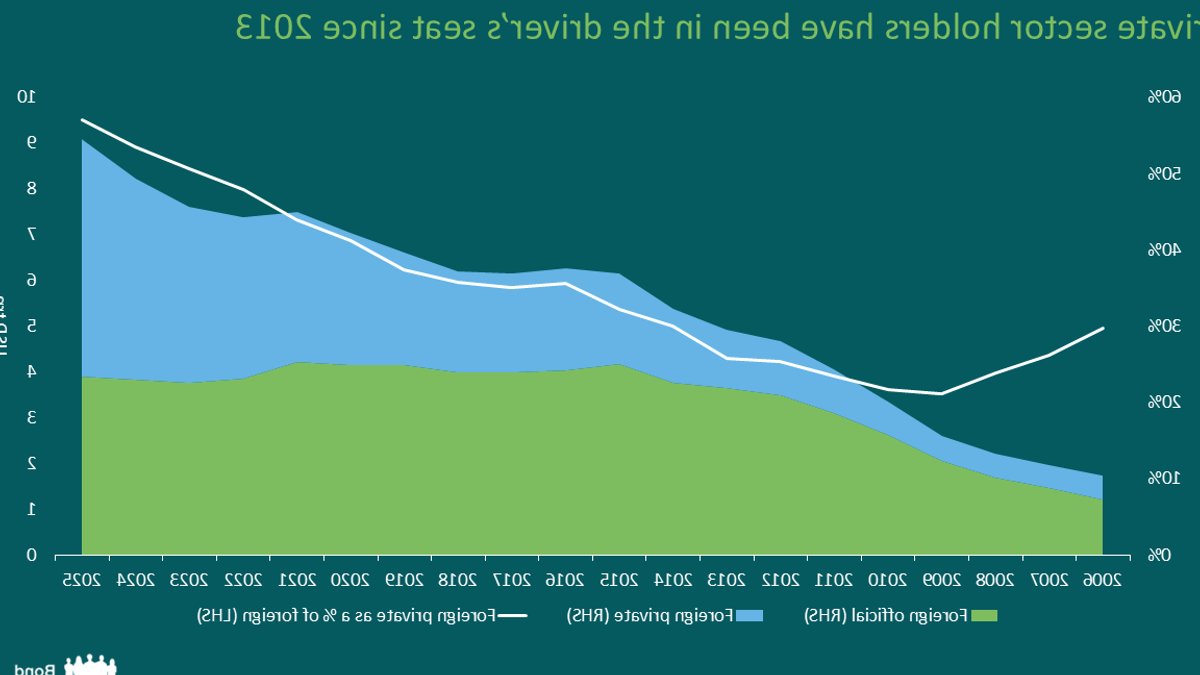
Post-2008 regulations pushed financial activity into the shadow banking sector, including non-bank financial institutions like hedge funds, private credit firms, and asset managers. These entities now control $260 trillion in assets, more than half of global financial intermediation. Most of that exposure is in sovereign bonds, positioning them as the main buyers in core markets.
The setup creates a fragile cycle. If market sentiment shifts suddenly, non-bank institutions could retreat, forcing banks to absorb losses. A rapid repricing of risk could trigger a funding squeeze, exposing developed markets to volatility.
Global imbalances have raised alarms before. The 1980s saw similar warnings before the Plaza Accord, and the early 2000s preceded the financial crisis. The current environment differs: the financial system is more interconnected, leverage is higher, and the main debt buyers are far more sensitive to price changes. A sudden shift in sentiment could force a difficult adjustment, one even the world’s largest economy might struggle to handle.
In early May, hedge fund manager Jeffrey Gundlach adjusted some of his funds, preparing for the possibility of a U.S. debt restructuring—a scenario once considered unthinkable. The Bank of England described the situation as being chained to the tail of a drunken dragon. Whether the dragon represents the market or the sovereign debt load, the message is clear: the system is more exposed than it seems.
Currency markets reflect these tensions. The Ghana cedi has slipped against major currencies, signaling broader instability in emerging markets. Meanwhile, Europe’s utilities sector faces its own challenges as spending surges reshape credit risk trends across the continent.

Markets Signal Distress as Spreads Widen


