


Korea Stocks Defy Strong Economic Fundamentals
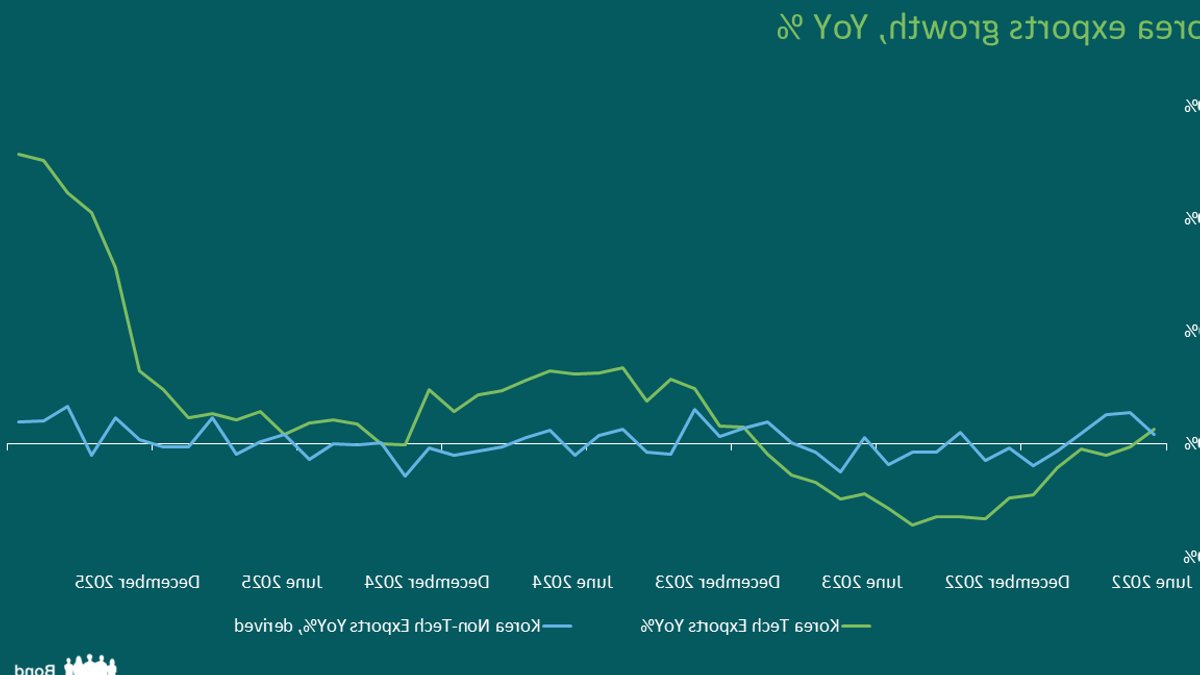
Korea’s equity market has been one of the strongest performers globally, with the KOSPI surging 262% since the start of 2025. This rally has been driven by the country’s booming semiconductor exports, which have contributed to a record USD123 billion current account surplus, or 6.5% of GDP in 2025.
Despite this strong economic backdrop, the Korean won (KRW) and Korean Treasury Bonds (KTBs) have been among the weakest performers globally. The KRW has depreciated 12.6% against the US dollar over the last twelve months, while KTBs have been the worst-performing local currency bond market in Asia since mid-2025.
The disconnect between Korea’s strong macro fundamentals and weak market pricing is striking. The country’s semiconductor industry has driven a significant increase in household incomes and wealth effects, which are expected to lift GDP growth to around 2.7% in 2026, above Korea’s long-term trend.
The stronger growth backdrop has also improved public finances, with higher tax revenues enabling the government to finance its supplementary budget without issuing additional KTBs. The managed fiscal deficit is now projected to narrow from 3.9% of GDP in 2025 to 3.1% in 2026.
Capital flows have overwhelmed macro fundamentals, driving the divergence between the KRW and macro fundamentals. Semiconductor exports have been strong, but equity-related outflows, overseas allocation by domestic investors, and limited conversion of export receipts back into KRW have weighed on the currency.
Approximately USD100 billion has flowed out of Korean equities over the last twelve months, with the bulk of the outflows driven by Samsung Electronics and SK Hynix, which together account for half of the KOSPI‘s market capitalization.
Related: China’s Zero-Tariff Policy Opens Ghana Export Opportunity
The continued weakness of the KRW could lead to higher imported inflation, affecting the daily lives of Koreans and potentially undermining investor confidence. This may influence the decisions of policymakers, who must balance the need to stabilize the currency with the risk of exacerbating financial instability, a situation that requires careful consideration of financial crisis lessons.
The KTB sell-off has reflected concerns about inflation and household debt. However, with inflation risks remaining subdued and the Bank of Korea projecting headline inflation of 2.7% in 2026, the sell-off in KTBs may have become excessive.
Current market pricing appears overly hawkish, with the Bank of Korea expected to deliver three rate hikes during this tightening cycle, whereas markets have priced in four hikes. The inclusion of KTBs in the FTSE World Government Bond Index is expected to attract approximately USD52 billion of passive inflows, providing an additional source of demand, which it needs.
A more stable currency backdrop should support the KTB market. The gap between market pricing and macro fundamentals has widened to levels that are difficult to sustain. As capital flow pressures gradually moderate and Korea’s strong external position continues to assert itself, both the KRW and the domestic bond market should increasingly reprice towards stronger underlying fundamentals.
It is a complex situation.

Have We Truly Learned From the GFC


