


Asian Currencies Poised for Surge Amid Fire Horse
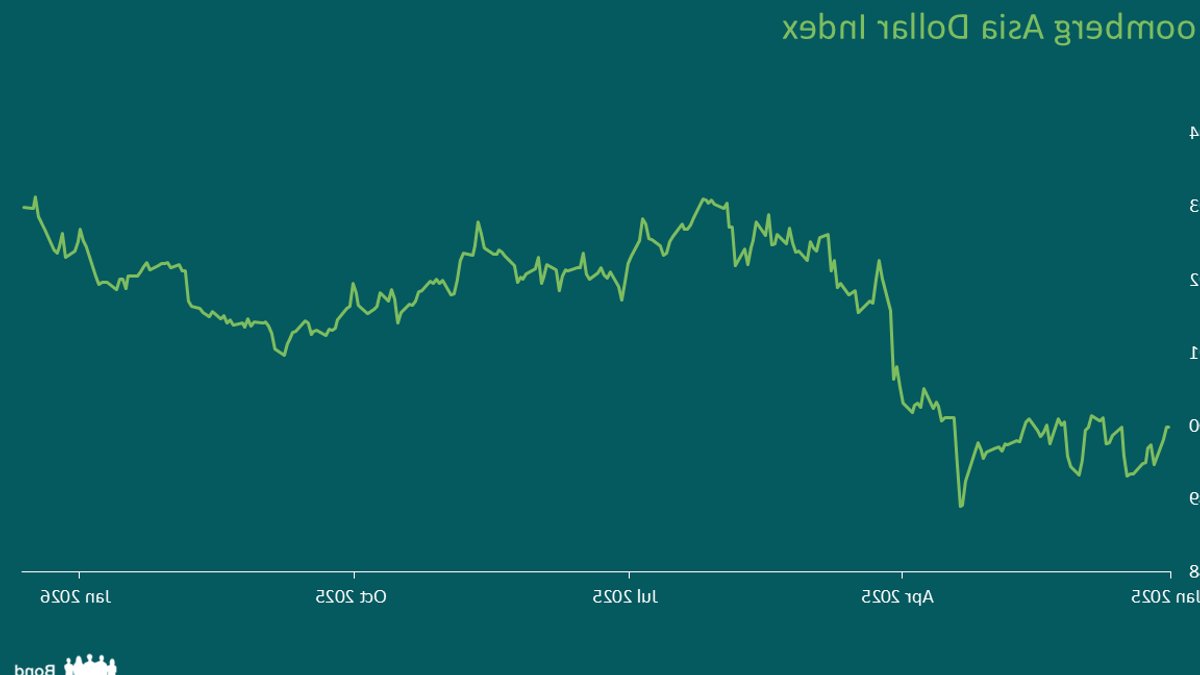
Asian currency markets start the Year of the Fire Horse on a tightrope, with signs of both renewed vigor and lingering uncertainty.
Modest gains after a cautious year
The previous lunar cycle, marked by the Green Wood Snake, ended with the Bloomberg Asia Dollar Index up just over three percent. That rise was steady rather than sharp.
Behind the aggregate lift, performance split sharply. The Malaysian ringgit climbed more than twelve percent against the dollar, while the Indian rupee slipped close to five percent.
Even with those moves, the region’s currencies still trailed many other emerging markets, suggesting the rebound was partial.
AI‑driven trade surge fuels external balances
Artificial intelligence investment now shapes not only equities but also the flow of goods. Demand for semiconductors, servers and data‑centre gear drives corporate spending worldwide.
Asia supplies the hardware backbone for that demand. According to the World Trade Organization, the region delivered almost two‑thirds of global AI‑related trade growth in the first half of 2025.
The boost shows up in current‑account numbers. The collective surplus rose to an estimated four‑point‑five percent of GDP in 2025, up from roughly two‑point‑three percent over the prior five years.
AI‑enabling exports accounted for a sizeable portion of total Asian shipments in 2024, showing the sector’s growing export relevance.
South Korea and Taiwan posted record surpluses, while Malaysia, Singapore, Thailand and the Philippines benefited from assembly, testing and data‑centre projects.
Higher foreign direct investment into AI‑linked infrastructure also adds to capital inflows, though the benefits are uneven across the region.
Because technology investment tends to move in cycles, the AI‑driven surge is expected to ebb as firms reassess capital spending, meaning not all economies will capture equal gains.
Related: Tech borrowing surge reshapes credit markets
Capital allocation may turn the tide
For decades, Asian savers have parked a large share of their surplus in U.S. assets. That share rose from thirty‑seven percent in 2020 to a peak of forty‑one percent in late 2024, easing slightly to forty percent in 2025.
The discussion of shifting away from U.S. assets has intensified as geopolitical frictions and divergent monetary outlooks raise concerns about over‑concentration.
Such placement has traditionally bolstered the dollar. Yet geopolitical tensions and shifting monetary expectations have sparked talk of diversifying away from U.S. holdings.
In the second quarter of 2025, uncertainty over U.S. policy sparked inflows into local‑currency bonds, lifting regional rates by about four percent.
During that same quarter, regional currencies collectively appreciated roughly four percent, reflecting the flow into local‑currency debt.
Investor exposure to Asian debt remains light, leaving room for further purchases if Federal Reserve easing appears likely.
If investors increase hedge ratios on U.S. positions, the resulting dollar sales would add further support to Asian bond markets.
At the same time, any swing in global risk appetite could reverse that momentum as quickly as it arrived.
The interplay of trade strength and capital shifts creates a volatile mix. If AI‑related spending stalls, both export flows and currency valuations could wobble.
Domestic fundamentals vary widely
Malaysia’s ringgit recovered dramatically after hitting record lows in 2024, helped by policy stability and AI‑linked capital spending.
Malaysia’s turnaround was reinforced by structural reforms, a stable policy environment, and diversification into AI‑linked projects.
Related: Bond Vigilantes World Cup Model Enters Knockout Phase
South Korea’s won enjoys upside from its semiconductor sector, yet domestic outflows sometimes dampen gains. Inclusion of Korean Treasury bonds in the FTSE World Government Bond Index in April 2026 may attract new money.
The April 2026 inclusion of Korean Treasury bonds in the FTSE World Government Bond Index is poised to draw new foreign inflows.
India’s rupee follows a different path, leaning on strong domestic bond yields and fiscal consolidation. A recent sovereign rating upgrade to BBB shows improving macro credibility.
S&P’s upgrade marked the first sovereign rating improvement for India in 18 years, highlighting enhanced macro credibility.
Indonesia faced a downgrade of its sovereign outlook over governance worries, and the Philippines continues to grapple with a corruption probe, highlighting how local issues still matter.
Risks linger amid the momentum
Even modest changes in U.S. trade policy can reshape expectations for Asian currencies, as tariff adjustments alter risk sentiment.
Raised AI expectations also carry risk. If productivity gains fall short of forecasts, the trade surge could soften faster than anticipated.
Financial conditions remain a wildcard. A reassessment of the Fed’s easing trajectory, renewed dollar strength or tighter global liquidity could curb inflows despite solid external balances.
The Monetary Authority of Singapore warned on 29 January 2026 that a synchronized correction in AI investment cannot be ruled out if productivity gains prove hard to monetize.
In a year symbolised by speed and sudden shifts, staying disciplined and adaptable will be essential for investors working through the currency environment.

Inflation spark risks turning into deflation shock


