


Tech borrowing surge reshapes credit markets
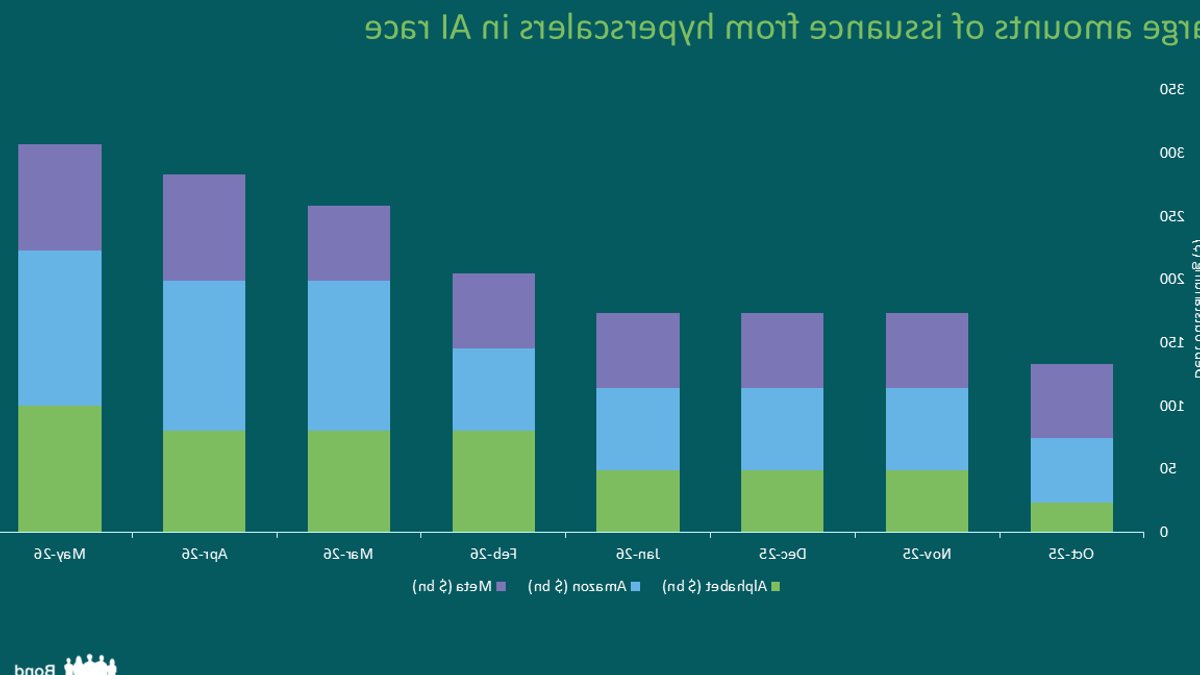
Big tech borrowing has surged to a level that is reshaping the credit market, with firms such as Alphabet, Amazon and Meta issuing bonds in volumes rarely seen from non‑financial corporations.
Debt Volume Hits Historic Levels
Over the past half‑year, the combined bond supply from these three firms has placed them among the top contributors to global corporate issuance. The scale is large enough that their presence is now felt across major indices, including the Bloomberg Global Aggregate Corporate Index.
The underlying driver is a capital‑intensive growth phase that cannot be covered by cash flow alone. Building out data centres, semiconductor capacity and network infrastructure to support artificial intelligence demands spending that rivals entire telecom roll‑outs.
At the same time, U.S. fiscal policy has introduced incentives that improve the economics of domestic capex. In practice, these measures act like a subsidy, prompting corporations to accelerate investment plans.
Related: Comcast’s amicable split opens doors for new partners
Despite the jump in borrowing, the impact on credit quality appears muted. They each report earnings before interest, taxes, depreciation and amortisation (EBITDA) in the $150 billion‑to‑$200 billion range. Even sizable debt additions shift leverage only modestly, keeping debt‑to‑EBITDA ratios well within high‑investment‑grade thresholds.
Pricing Pressures and Index Weighting
Bond markets typically respond to a surge in supply by demanding higher spreads. That pattern holds true for sectors undergoing capex‑driven issuance cycles, but the current episode is notable because it involves some of the highest‑quality issuers.
The growing weight of these firms in benchmark indices reflects both the volume and persistence of their issuance. As a result, index funds that track the Bloomberg composite must allocate a larger share of assets to these securities.
However, bond portfolios are subject to strict diversification limits that cap exposure to any single issuer. This structural constraint means that even top‑rated names can encounter difficulty finding enough buyers when supply spikes sharply.
Related: Standard Chartered Leads Ghana Bank Pay Rankings
In the short run, the market has struggled to absorb the volume without adjusting pricing. The spreads on new issues from the three tech giants have settled at levels that look attractive when compared with the broader investment‑grade market.
Investor Opportunity Amid Supply Dislocation
The combination of robust fundamentals, policy‑driven investment and temporary supply pressure creates a window for investors seeking high‑quality credit at more favourable valuations.
Some of the largest, most profitable companies in the world are issuing debt at spreads that appear attractive relative to the broader investment grade market. For investors, that creates a clear opportunity. The combination of strong fundamentals, policy-driven investment and temporary supply pressure is opening a window into high-quality credit at more favourable valuations than might otherwise be expected.
From a broader perspective, the shift illustrates how non‑traditional borrowers can influence market activity traditionally dominated by banks and industrial firms. When a handful of firms with deep pockets enter a capital‑intensive phase, they can alter supply‑demand balances in ways that affect pricing across the entire investment‑grade segment.

Comcast's amicable split opens doors for new partners


